Your systems already
generate the data.
We make them think.
Telaia is a systems integrator specializing in applied AI. We embed reasoning agents into the infrastructure you already operate — they read live state from your equipment, decide in plain language, and act through the protocols your systems speak. Not a rules engine. Not a chatbot bolted onto a dashboard.
On-prem by design
The models can run inside your network. Camera frames, ID scans, and telemetry never have to leave the building.
Human approval gates
Every automation chooses: act autonomously, or queue for sign-off. The agent proposes; you decide who approves what.
No rip-and-replace
We integrate with the panels, controllers, and software you already bought. The AI layer sits on top — it does not compete with your stack.
01 — What we integrate
Bring us the system you already run.
The runtime is the same everywhere: read live state, reason in natural language, act through an approval gate. What changes per client is the connector — and connectors are the part we're fast at.
Building automation
HVAC, chillers, pumps, lighting. The agent reads live points over BACnet or Modbus, reasons about comfort vs. load, and writes setpoints — with an audit trail for every decision.
Access control & security
One identity graph across doors, credentials, and events. Held-open gates, out-of-hours patterns, credential misuse — reasoned about, not just logged.
Visitor & front-of-house
Registration to check-out as a real state machine. ID capture via vision-LLM OCR, host notification, badge issuance — the lobby runs itself, staff handle exceptions.
CCTV & video intelligence
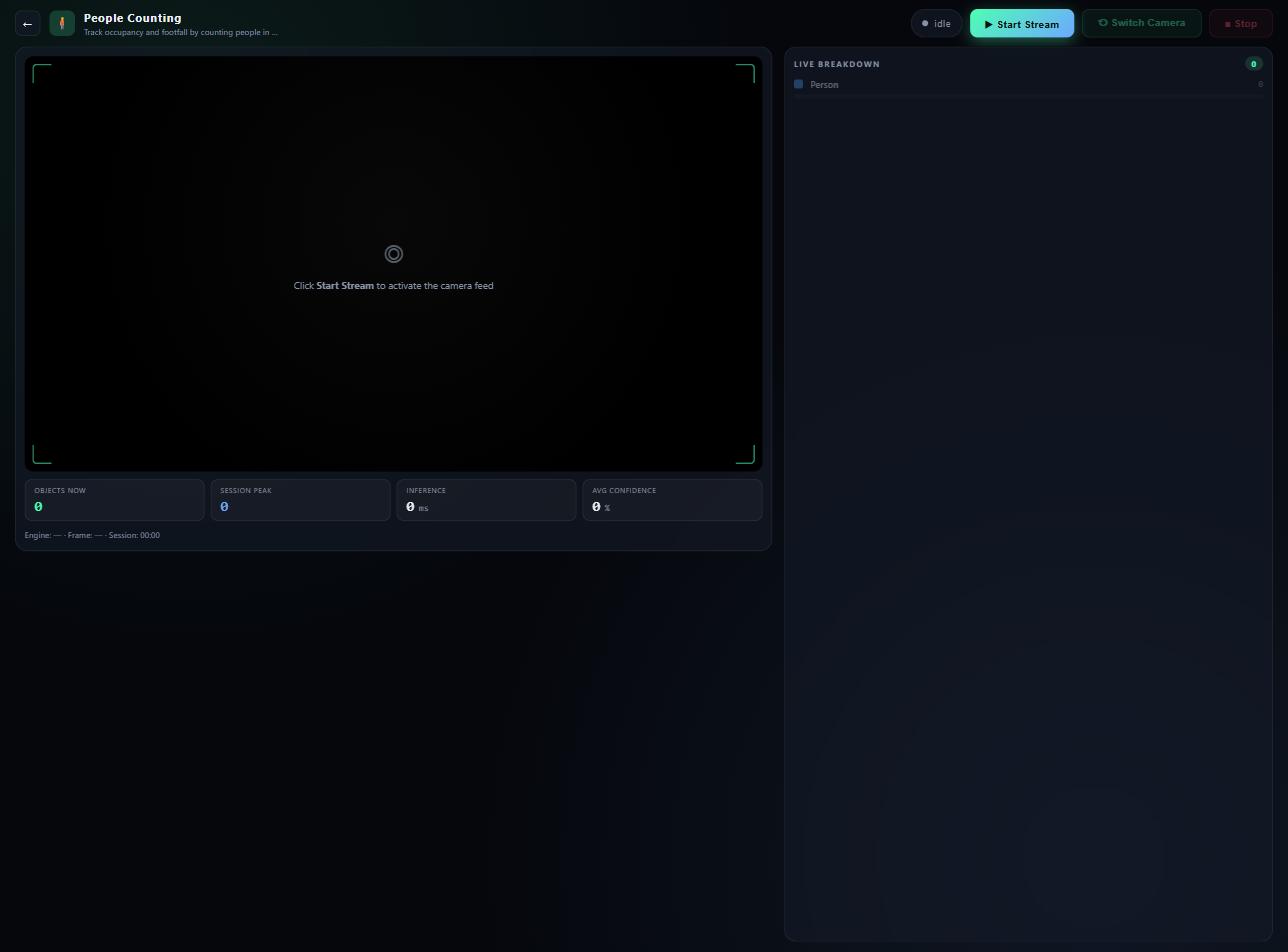
Vision models on your existing camera streams. Describe a scene in plain language, flag what matters, and cross-reference with door and visitor events.
Energy & utilities
Load profiles, tariff windows, generator and UPS state. The agent shifts what can move, flags what cannot, and explains the bill in sentences, not spreadsheets.
Business operations
Documents, tickets, WhatsApp, ERP and CRM records. The same agent runtime pointed at paperwork — extraction, routing, drafting — with the same approval gates.
02 — Platforms
Three platforms. One agent runtime.
These aren't concepts — they're the same runtime described above, shipped as products. Every custom integration we build inherits their trigger engine, approval queue, and audit trail on day one.
VedAI
Building management
Building management, operated by an LLM agent instead of static rule tables.
- ▸ Triggers: cron schedule or threshold watch (30s tick)
- ▸ Agent reasons in natural language over read points, decides the action
- ▸ Executes immediately, or queues for human approval — your call, per automation
- ▸ Per-automation execution lock — no overlapping runs, configurable cooldown
VerifAI
Visitor management
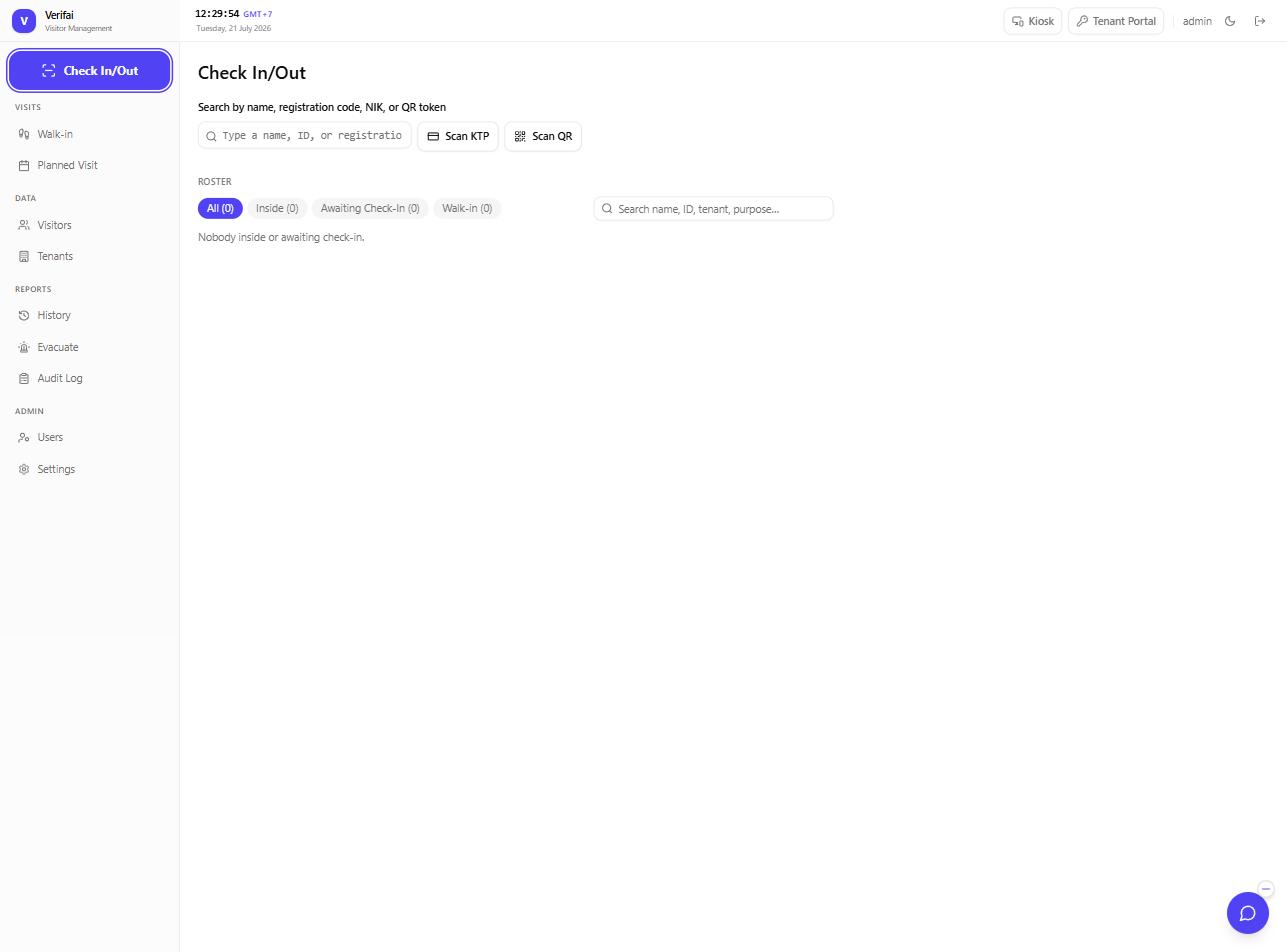
Visitor management for buildings — registration through check-out, with a real state machine.
- ▸ Visit lifecycle: upcoming → open → in_progress → overdue → completed
- ▸ Registration ≠ check-in — slots consumed at registration, re-entry tracked separately
- ▸ KTP (ID card) capture via vision-LLM or a dedicated PaddleOCR microservice, same JSON contract
- ▸ Separate auth domains: staff console vs. per-unit tenant portal
Access Control AI
Access control
as Aspha — by Apera Indonesia
One identity graph across visitor, tenant, and device events — door and credential activity reasoned about, not just allow/deny lists.
- ▸ Anomaly reasoning on access patterns — held-open doors, mismatched visits, unusual hours
- ▸ Shares the same trigger + approval-queue runtime as VedAI and VerifAI
- ▸ Multi-brand: works across whatever readers and panels are already installed
03 — Architecture
The AI sits on top. Nothing gets replaced.
Read it bottom-up: your existing systems keep running exactly as they are. We layer intelligence above them — data flows up, decisions flow down, and your team stays in command at the top.
Your team
In command
What you get
Plain language
Telaia
Agent runtime
Telaia
MCP engine
Yours, unchanged
Existing systems
Every action the agents take goes through the same path your technicians use today — the native protocols your equipment already speaks. Anything sensitive waits in the approval queue until someone on your team says go.
04 — Integrations
If it has an interface, the agent can reason over it.
Building & industrial
 BACnet/IP
  Modbus TCP · RTU
  MQTT OPC-UA
  KNX SNMP
 Security & video
 ONVIF · RTSP OSDP · Wiegand
  Suprema
  HID Aero Amico
  TANlock
 Business & data
AI runtimes
Protocol not on the list? That's a connector, not a rewrite — bring it to the walkthrough.
05 — Partnership
Aspha × Telaia
One of our integrations — with Apera Indonesia, the physical-security specialists behind access control, CCTV, and visitor management deployments for names like BCA, XL Axiata, and NTT.
The platform — Aspha, by Apera Indonesia

Most sites run their security as silos — one console per hardware brand, one login per vendor, no shared picture. Aspha ends that: a canonical model with a driver per brand, the same architecture the world-class physical-security platforms use. Unified live transactions, floorplans, device topology, and cross-brand enrollment — brand becomes a column, not a system.
HID Aero Suprema  Hikvision
  Honeywell Pro-Watch Amico Amico TANlock by FATH HID Biometric EasyLobby EasyLobby
 The intelligence — by Telaia
embedded in the consoleAsk the whole estate
One question spans every brand at once — doors, readers, racks, turnstiles — because the agent reasons over the unified model, not eight separate consoles.
Investigate, not just alert
A forced-door alarm becomes a narrative: who badged nearby, what the cameras flagged, which credential was used — correlated across vendors in seconds.
Reports that write themselves
Shift summaries, incident timelines, and compliance exports drafted from live transaction data, in plain language, on request.
Operate by instruction
"Enroll this contractor for the north wing until Friday" — the agent drives cross-brand provisioning, with every action gated by approval.
This is the partnership in one line: Apera unified the hardware, Telaia makes it reason. Apera owns the product, the integrations, and the customer relationship — we build the intelligence inside it. When eight brands already speak one language, one agent can command all of them.
06 — Working with us
From walkthrough to working agent.
A pilot is scoped in weeks, not quarters — one system, one site, real data.
Walkthrough
You show us the system. We map its read points, its write points, and the decisions your people make around it today.
Connector
We speak to your equipment in its own protocol. Nothing gets replaced, nothing gets ripped out — the agent plugs into what exists.
Shadow mode
The agent reasons over live data and recommends actions — every one goes to an approval queue. You watch it think before you let it act.
Graduated autonomy
Automations you trust go autonomous, one at a time. The rest keep a human in the loop, permanently if you like. Autonomy is a dial, not a switch.
Your infrastructure already generates the data.
It just doesn't think yet.
Tell us what you run. We'll tell you what the agent would do with it — and scope a pilot on one system to prove it.